
Exceptions in the DWH
In ETL workflows, stage-to-DWH exceptions occur when records that pass the validation rules in the stage table fail to meet the business or functional requirements defined for the Data Warehouse (DWH). These exceptions are more complex than technical errors, as they involve higher-level checks such as business logic, functional rules, or contextual accuracy. Handling these exceptions ensures that the DWH maintains reliable and meaningful data for analysis and reporting
The common exception include:
-
Business Rule Violations: Records do not comply with specific business rules or policies. For example, a loan amount might exceed the organization’s maximum lending limit, violating internal guidelines.
-
Data Relationship Issues: Records fail to maintain consistent relationships with related data. For instance, a loan record may reference a customer ID that does not exist in the customer dimension table, breaking referential integrity.
-
Incomplete Data: Critical fields required for business operations are missing or null. For example, a transaction record lacking a product ID can hinder sales analysis and reporting.
-
Duplicate Business Records: Redundant or conflicting records exist, causing data inconsistencies. An example would be multiple active loans linked to the same loan ID, creating ambiguity in reporting.
-
Outliers and Anomalies: Data points deviate significantly from expected values or patterns. For instance, a transaction with an unusually high amount might suggest errors or fraud and requires further investigation.
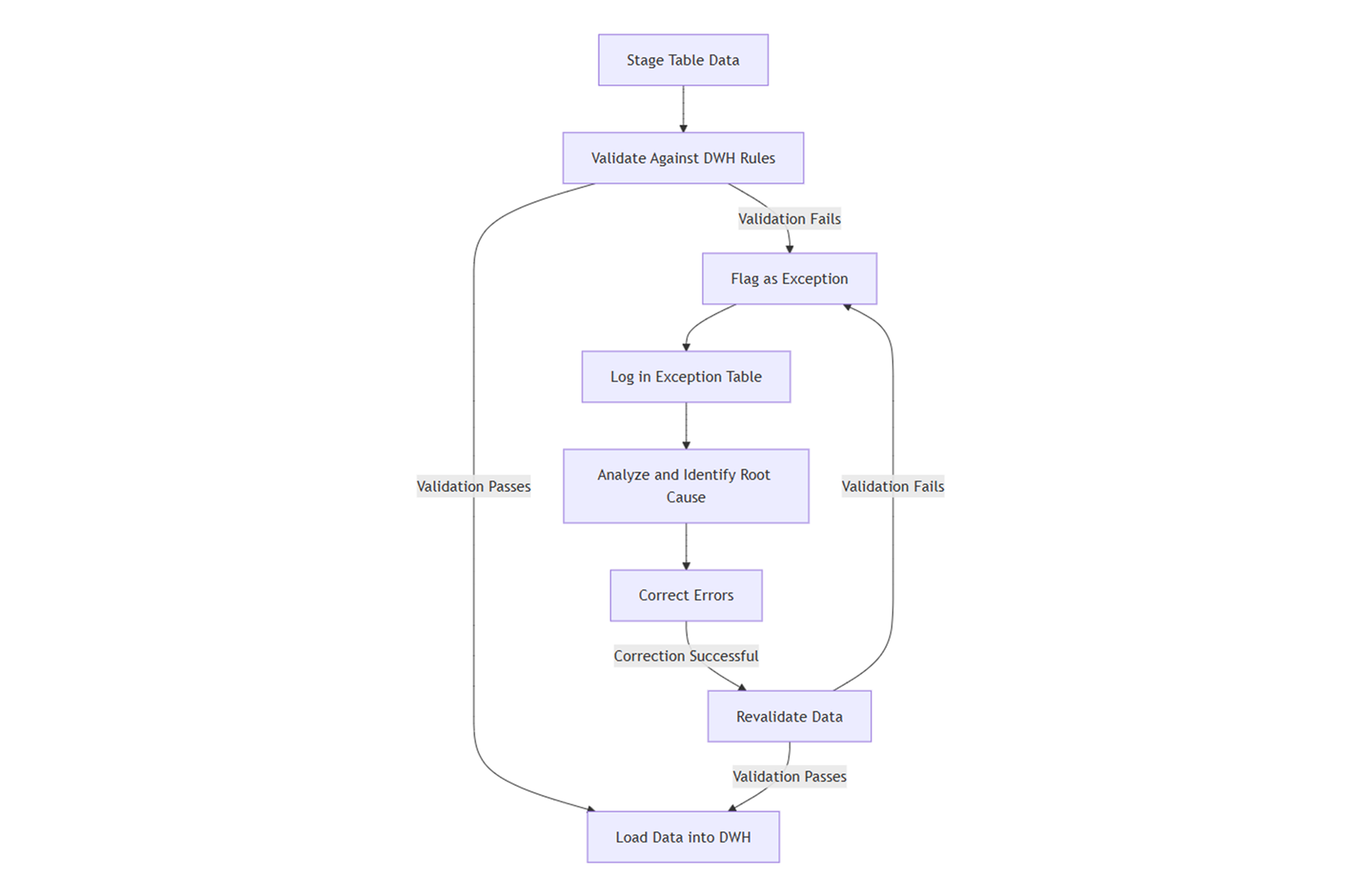
Managing exceptions is essential to keep the data accurate and the ETL process running smoothly. Next, we will look at how exceptions are handled, including logging them, fixing issues, and rechecking the data.