
What is a Data Workflow
Data Workflow
A data workflow is a series of steps or processes that define how data is collected, processed, transformed, analysed, and insights are shared. It helps manage data efficiently and accurately. A data workflow simplifies how businesses handle data by making the process organized and efficient. Further, by automating these series of steps, data workflows help businesses to save time and improve accuracy of results.
Why Data Workflows are Important
Data workflows are important as they help to manage and process data efficiently, ensuring it is accurate and reliable. They clean and organize raw data, reduce errors and save time. By automating repetitive tasks, data workflows make it easier to handle large amounts of data and maintain consistency. They also provide transparency, allowing you to track and troubleshoot data processes easily. Workflows prepare data for advanced analysis, like machine learning, and improve teamwork by offering an open, shared process. Additionally, they help follow data regulations and use resources wisely, making them essential for organizations that rely on data to make informed decisions.
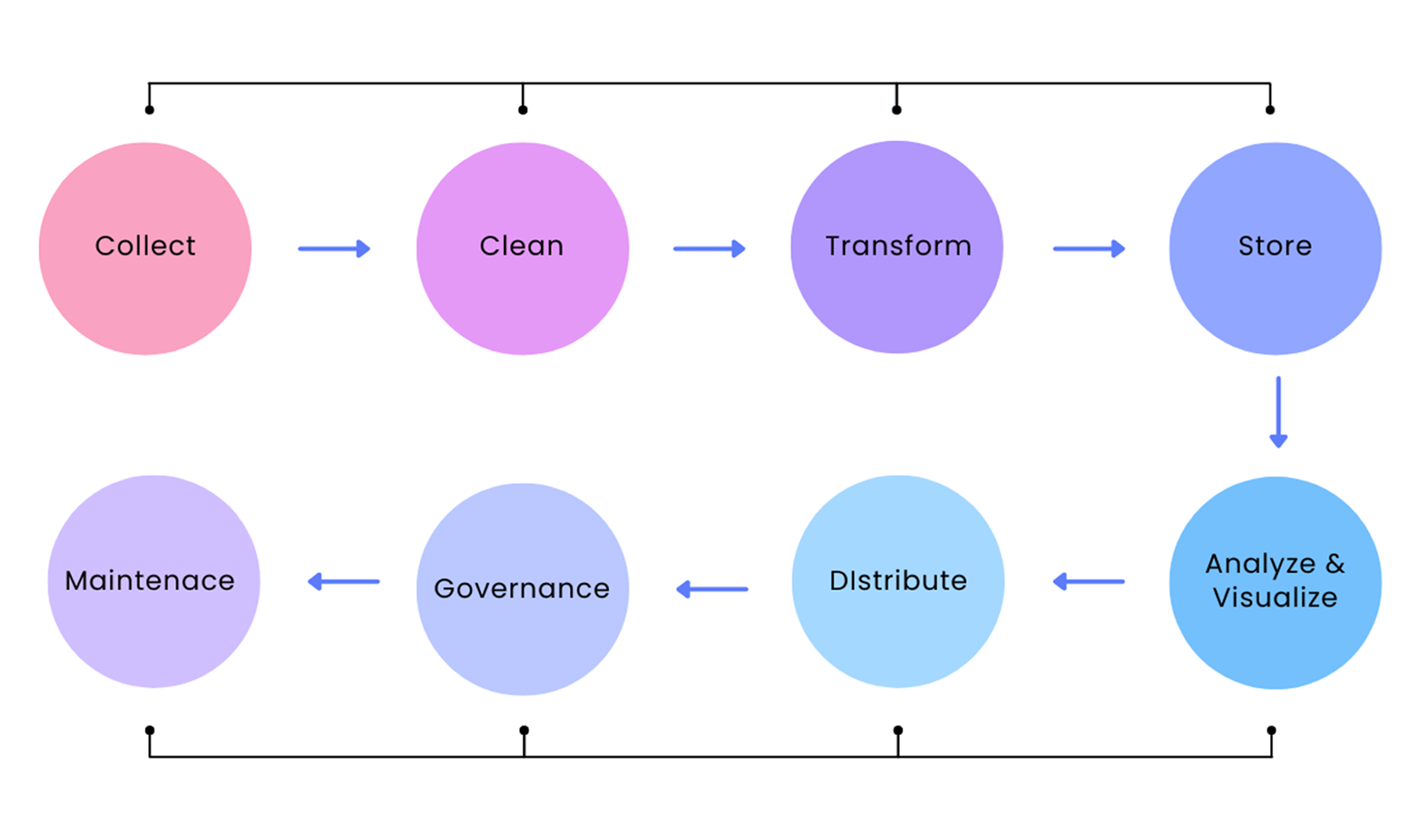
A data workflow represents a structured series of steps to manage data through its lifecycle. It involves processes like data collection, cleaning, transformation, analysis, and visualization, ensuring data flows smoothly between systems and tools. Data workflows often require manual intervention at certain stages, such as validating data quality or making critical decisions. They are designed specifically for data-centric operations like ETL (Extract, Transform, Load) pipelines, database migrations, and analysis preparation.
The primary goal of a data workflow is to maintain data integrity and readiness for analysis.
Key Process of a Data Workflow
Data Collection
This step gathers data from various sources, such as databases, APIs, or files.
Data Cleaning
Here, the system removes errors, duplicates, or incomplete data to ensure the information is correct.
Data Transformation
The data is organized and converted into a format that is easy to analyze or store.
Data Storage
Processed data is stored in a database, data warehouse, or data lake for later use.
Data Analysis and Visualization
At this stage, tools analyze the data and create visualizations to provide insights.
Data Distribution
Data or insights are shared with stakeholders, business applications, or other systems for further use.
Data Governance
This process ensures that data is managed securely and complies with regulations. It establishes policies for data access, quality, and usage to maintain consistency and integrity.
Data Maintenance
Regular updates and monitoring are performed to ensure data remains accurate, relevant, and up-to-date. This includes removing outdated records, optimizing storage, and addressing errors in the system.
Data workflows are more about data movement and processing, often requiring manual oversight for data accuracy. In contrast, workflow automation targets broader task execution across multiple domains, aiming to reduce human involvement in repetitive or routine activities. Let us learn about workflow automation in the next section.