
Inmon Methodology
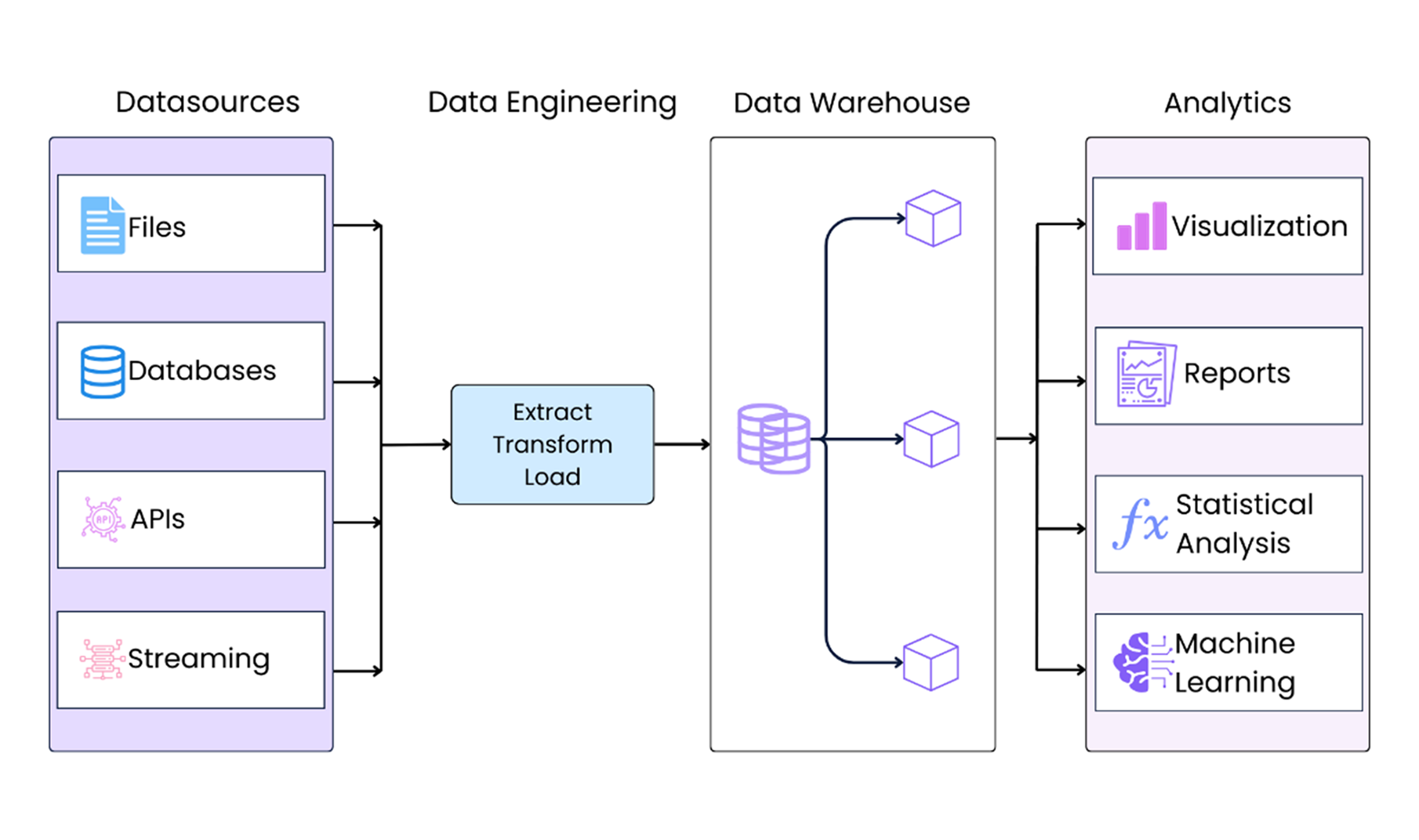
The Inmon approach, developed by Bill Inmon, starts with creating a centralized data warehouse (EDW). It uses a top-down approach, where all data is stored in a normalized format to ensure consistency and eliminate redundancy.
Inmon is better for large, complex businesses that need a centralized system to manage data consistently and at scale. It creates a unified source of truth, which is ideal for organizations with many interconnected systems and diverse data sources.
How It Works
- Data is stored centrally and then distributed to smaller data marts as needed.
- The focus is on integration and long-term scalability.
Benefits
- Provides a single, unified source of truth for the entire organization.
- Scales well as the business grows.
- Best for managing complex data from multiple sources.
Inmon’s approach requires to use the Third Normal Form(3NF) to:
- Eliminate duplication and save storage space.
- Ensure data consistency across the system.
- Make updating data more efficient by preventing unnecessary changes in multiple locations.
- Querying made more complex as data is spread across multiple tables.
This is why Kimball’s methodology often uses less-normalized structures like star schemas for simpler and faster queries. Many businesses use a combination of both methods. They often start with Kimball’s data marts to quickly meet immediate needs and then build toward Inmon’s centralized data warehouse for long-term growth and integration. This hybrid approach helps businesses balance speed, flexibility, and reliability while addressing both short-term and strategic goals.
Differences Between Kimball and Inmon
| Aspect | Kimball | Inmon |
|---|---|---|
| Approach | Bottom-up: Starts with data matts. | Top-down: Starts with a centralized data warehouse (EDW). |
| Focus | Business process-specific, such as sales or marketing. | Organization-wide integration for all data. |
| Data Structure | Uses dimensional modelling (star or snowflake schema). | Uses normalized structure (third normal form). |
| Ease of Use | Simple for end users to query and analyze. | Requires technical expertise for querying. |
| Implementation Speed | Faster to implement for specific needs. | Slower due to comprehensive design and integration. |
| Scalability | Scales within specific business processes. | Highly scalable for growing and complex data ecosystems. |
| Best For | Small to medium-sized businesses or targeted projects. | Large organizations with diverse and complex data needs. |
| Data Integration | Integrates data at the data mart level. | Fully integrates data at the enterprise level. |
| Example Use Case | Building a sales or marketing data mart first. | Creating a unified system for global business reporting. |
In the next section, we will look at DWH schemas such as Star and Snowflake that arise out of Kimball & Inmon techniques.